You are here:Home » Blog » How to choose a water cooling laser welding machine?
How to choose a water cooling laser welding machine?
Views: 0 Author: Site Editor Publish Time: 2026-01-23 Origin: Site
How to choose a water cooling laser welding machine?
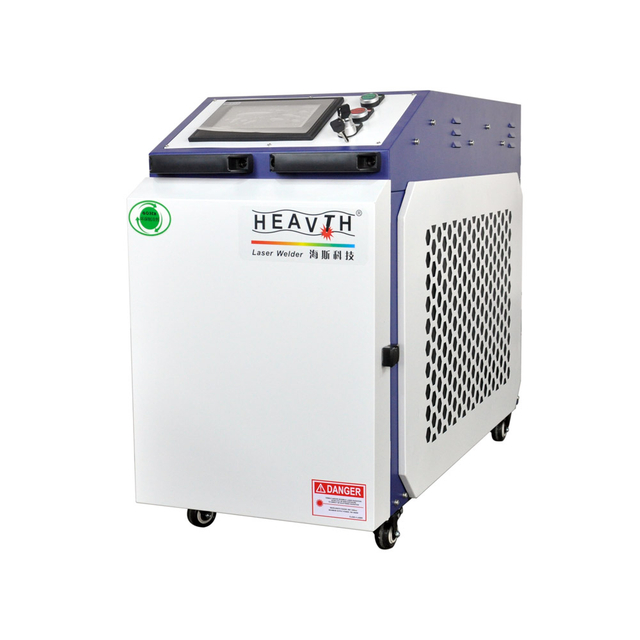
For high-power welding tasks and continuous production needs, a water-cooled laser welder stands out as the ideal equipment due to its superior heat dissipation and stable temperature control precision. Unlike air-cooled laser welder models limited by power and operation duration, water cooling systems excel in high-load scenarios, making them a staple in automated production lines and heavy-industry applications. However, selecting the right water-cooled laser welding machine requires more than just focusing on power—it demands alignment with your production goals, workpiece specifications, and long-term operational costs. This guide breaks down key selection criteria to help you make an informed decision for your business on heavth.com.
1. Prioritize Power Range Based on Welding Requirements
The power of a water-cooled laser welding machine directly determines its welding capacity, especially for thick plate welding and high-precision tasks. Unlike low-to-medium power air-cooled alternatives, water-cooled models typically cover a power range of 1000W to 3000W+ , supporting continuous high-load operation without performance attenuation.
Key Selection Tips:
For welding workpieces 2mm-5mm thick (e.g., automotive parts, steel structures), a 1000W-2000W water-cooled laser welder balances efficiency and cost.
For thick plates above 5mm or high-speed welding on automated production lines, opt for 2000W+ models to ensure deep penetration and consistent weld quality.
Avoid overcapacity—choosing an excessively high-power machine increases upfront costs and energy consumption without adding value for small-batch production or thin-walled workpieces.
2. Evaluate Heat Dissipation System and Temperature Control
The core advantage of a water-cooled laser welder lies in its advanced cooling system, which directly impacts equipment stability, service life, and welding quality. A reliable heat dissipation system ensures minimal temperature fluctuation, preventing laser generator damage and power loss.
Key Factors to Check:
Temperature Control Precision: High-end models maintain a fluctuation range of ±0.08℃-±0.1℃, critical for high-precision welding tasks like aerospace components. Avoid models with fluctuations exceeding ±1℃, as they may cause inconsistent weld seams.
Cooling Medium Compatibility: Ensure the system supports specialized coolant or deionized water, and check if it has antifreeze protection for low-temperature environments (below 0℃). Poor coolant compatibility leads to pipe scaling and reduced heat dissipation efficiency.
Chiller Configuration: The matching chiller is a vital part of the cooling system. Choose a chiller with adjustable flow rate and temperature, and verify its cooling capacity (measured in kW) to match the laser welder’s power—undersized chillers cause overheating and equipment downtime.
3. Consider Operational Efficiency and Adaptability
Water-cooled laser welding machines are designed for long-term, high-load operation, so operational efficiency and environmental adaptability are crucial for reducing operating cost and improving productivity.
Continuous Operation Capability
For 24/7 automated production lines, select models with 24-hour continuous operation certification. Check the machine’s duty cycle (ideally 100% for high-load scenarios) and heat sink design—optimized heat sinks reduce the risk of overheating during prolonged use.
Environmental Adaptability
Industrial workshops often have dusty or high-temperature conditions. Choose water-cooled laser welders with dust-proof protection for core components (IP54 or higher rating) to avoid dust accumulation affecting performance. Additionally, ensure the chiller can operate stably in the workshop’s temperature range (typically 5℃-40℃).
4. Calculate Total Cost of Ownership (Not Just Upfront Price)
While water-cooled laser welder models may have a lower initial purchase price than high-power air-cooled alternatives, their maintenance cost and auxiliary equipment investment add to the total cost of ownership.
Upfront Costs: Include the laser welder, matching chiller, and installation fees. Budget for additional accessories like coolant storage tanks and pipe fittings.
Maintenance Costs: Coolant needs replacement every 3-6 months (cost varies by brand and volume), and pipes require regular cleaning to prevent scaling. Factor in labor costs for annual maintenance of the chiller and laser generator.
Energy Costs: Water-cooled models consume more energy than air-cooled ones, especially for 24-hour operation. Opt for energy-efficient chillers (with inverter technology) to reduce long-term energy expenses.
5. Verify After-Sales Support and Technical Specifications
Industrial laser equipment requires reliable after-sales service to minimize downtime. When choosing a water-cooled laser welding machine, prioritize brands with comprehensive support, including on-site maintenance, spare parts supply, and technical training.
Key Technical Specifications to Confirm:
Weld seam precision (ideally ±0.1mm for high-precision tasks).
Laser source type (fiber laser is preferred for its stability and energy efficiency).
Control system functionality (supports automated integration and parameter storage for batch production).
Warranty period (minimum 1-2 years for the laser generator and chiller).
Conclusion: Select the Right Water-Cooled Laser Welder for Your Production Needs
Selecting the optimal water-cooled laser welder boils down to aligning its performance capabilities with your unique production demands—whether you’re running 24/7 automated lines, handling thick plate welding, or pursuing high-precision workpiece fabrication. Rather than fixating on upfront costs alone, prioritize heat dissipation efficiency, temperature control precision, and long-term total ownership costs to ensure a worthwhile investment.
For personalized recommendations tailored to your industry (automotive, aerospace, construction, etc.), the experts at heavth.com can help you select the optimal water-cooled laser welding machine based on your workpiece specifications, production volume, and budget. Contact us today to elevate your welding efficiency and quality.
 简体中文
简体中文 English
 العربية
 Français
 Русский
 Español
 Português
 Deutsch
 italiano
 日本語
日本語 한국어
한국어 Nederlands
 Tiếng Việt
 ไทย
ไทย Polski
 Türkçe
 ພາສາລາວ
 ភាសាខ្មែរ
 Bahasa Melayu
 ဗမာစာ
ဗမာစာ Filipino
 Bahasa Indonesia
 magyar
 Română
 Čeština
 Монгол
 қазақ
қазақ Српски
 हिन्दी
 فارسی
فارسی Kiswahili
 Slovenčina
 Slovenščina
 Norsk
Norsk Svenska
 українська
 Ελληνικά
 Suomi
Suomi Հայերեն
 Latine
 Dansk
Dansk Shqip
Shqip বাংলা
বাংলা Hrvatski
 Afrikaans
 Gaeilge
 Eesti keel
 Oʻzbekcha
 latviešu
 Aymara
 Azərbaycan dili
 Беларуская мова