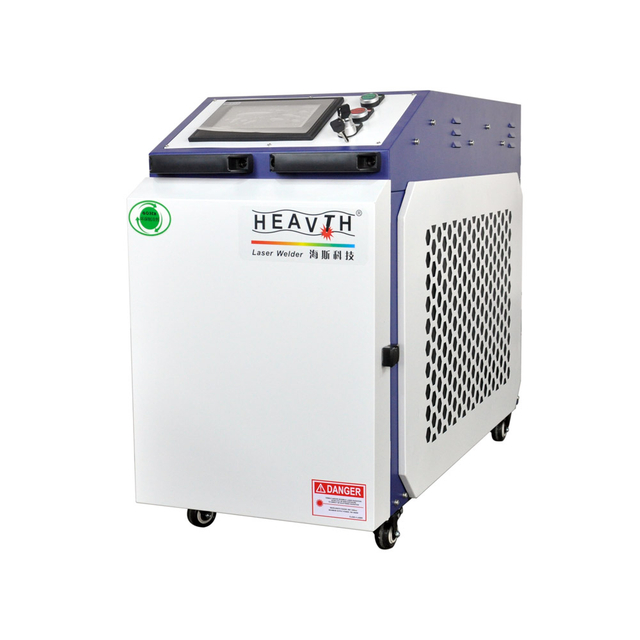
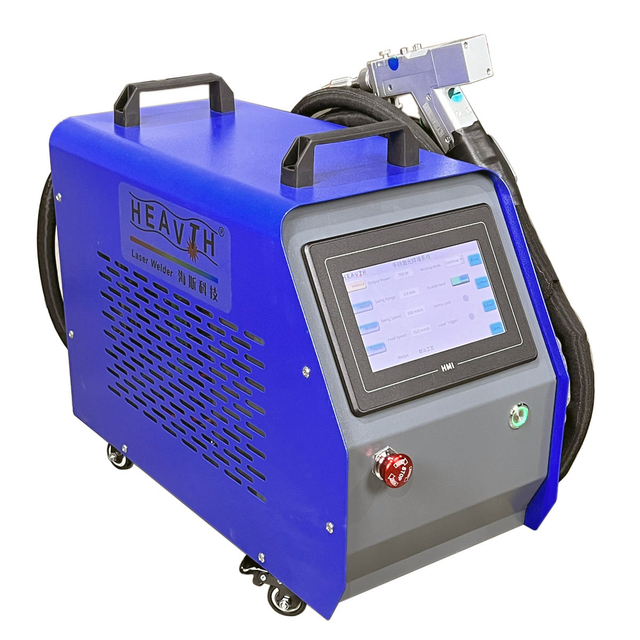
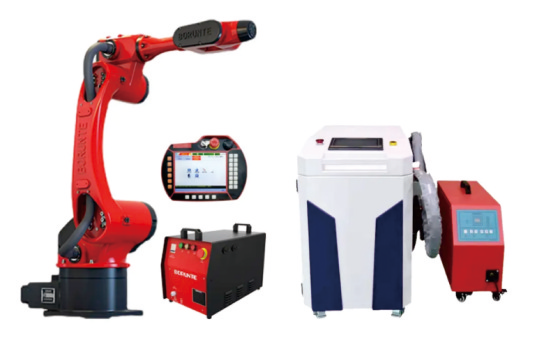
Recently, many users have requested more basic popular science content about laser welding—and we’ve got you covered! Today, we’ll break down this transformative technology that’s reshaping industrial manufacturing, from core principles to real-world applications. As a trusted provider of laser processing solutions, heavth.com delivers actionable insights for manufacturers, engineers, and decision-makers seeking to leverage precision laser welding.
In laser processing technology, laser welding, laser cutting, and laser marking are the "three pillars" of modern manufacturing—powering new energy vehicles, power batteries, electronics, and medical devices. Among these, laser welding stands out for its unrivaled precision, making it indispensable for high-end production.
Compared with laser cutting and laser marking, laser welding has a shorter development history but higher process complexity. Unlike "removal-based" cutting/marking, laser welding uses localized melting to reconstruct stable material connections—demanding top-tier laser performance and process control. That’s why industry leaders rely on professional laser welding equipment from heavth.com for consistent results.
Laser Welding vs. Traditional Welding: Clear Advantages
As an advanced welding technology, laser welding offers game-changing benefits:
Large penetration depth & high welding speed
Minimal heat-affected zone (HAZ) & welding deformation
Low environmental requirements (no vacuum/magnetic interference)
Compatible with non-conductive materials (no X-ray generation)
These strengths make laser welding the go-to choice for new energy vehicle battery welding, power battery module assembly, and precision electronics—industries where reliability is critical. In contrast, traditional methods (resistance welding, arc welding) fall short:
Welding Method
Penetration Depth
Deformation
Joint Strength
Precision
Laser Welding
Deep (up to 20mm)
Minimal
High (30%+ vs traditional)
Micron-level
Resistance Welding
Shallow (<5mm)
Significant
Low
Millimeter-level
Arc Welding
Moderate (<10mm)
Severe
Moderate
Low
While laser welding equipment has higher upfront costs, it reduces long-term expenses via lower scrap rates (down to 1% vs. 8-10% for traditional methods) and automation compatibility.
5 Main Types of Laser Welding (With Applications)
Choose the right laser welding type for your needs:
1. Heat Conduction Welding
Ideal for thin materials (0.1–2mm): Electronic components, medical devices
Key benefit: No deformation—critical for micro-welding (e.g., sensor terminals)
Heavth use case: A 3C manufacturer reduced defect rates by 40% using our heat conduction welding system.
2. Deep Penetration Welding
Creates a "keyhole" for thick metals (2–20mm): Automotive bodies, aerospace parts
Key benefit: Narrow welds with high strength (e.g., EV chassis welding)
Heavth use case: A new energy battery maker boosted production speed by 50% with our deep penetration welders.
3. Hybrid Welding (Laser + MIG/TIG)
Enhances gap tolerance: Shipbuilding, construction machinery
Key benefit: Combines laser precision with traditional flexibility
For plastics/multi-layered materials: Smartphone casings, medical packaging
Key benefit: Seamless, hermetic seals
Assembly Precision Tips:
Butt welding: Gap ≤0.05mm (stricter for thin materials)
Penetration welding: Tight layer fitting (critical for battery tabs)
Core Factors for High-Quality Laser Welding
1. Laser Energy Control
Different materials (steel, aluminum, copper) absorb 5–50% of laser wavelengths—choosing the right laser (fiber/CO₂) is make-or-break. Heavth’s laser welding equipment features:
Precision power control (±0.1% stability)
Adaptive wavelength adjustment for dissimilar materials
Precision laser systems (micro-welding for electronics/medical devices)
Customer Success Story: A leading EV manufacturer replaced traditional arc welding with Heavth’s laser welding systems, cutting production time by 35% and reducing warranty claims by 60%—all while meeting strict safety standards.
Contact our team today to get a free laser welding consultation. Let Heavth help you enhance productivity, reduce costs, and stay ahead in 2024’s competitive manufacturing landscape.
Keywords: laser welding, laser welding principles, deep penetration welding, heat conduction welding, laser vs traditional welding, laser welding quality factors, new energy battery welding, precision laser welding, Heavth laser welding equipment, EV battery welding, laser brazing
Meta Description: Learn laser welding basics in 5 minutes—types (deep penetration, heat conduction), advantages over traditional welding, quality factors. Get Heavth’s tailored laser welding solutions for your industry.
 简体中文
简体中文 English
 العربية
 Français
 Русский
 Español
 Português
 Deutsch
 italiano
 日本語
日本語 한국어
한국어 Nederlands
 Tiếng Việt
 ไทย
ไทย Polski
 Türkçe
 ພາສາລາວ
 ភាសាខ្មែរ
 Bahasa Melayu
 ဗမာစာ
ဗမာစာ Filipino
 Bahasa Indonesia
 magyar
 Română
 Čeština
 Монгол
 қазақ
қазақ Српски
 हिन्दी
 فارسی
فارسی Kiswahili
 Slovenčina
 Slovenščina
 Norsk
Norsk Svenska
 українська
 Ελληνικά
 Suomi
Suomi Հայերեն
 Latine
 Dansk
Dansk Shqip
Shqip বাংলা
বাংলা Hrvatski
 Afrikaans
 Gaeilge
 Eesti keel
 Oʻzbekcha
 latviešu
 Aymara
 Azərbaycan dili
 Беларуская мова