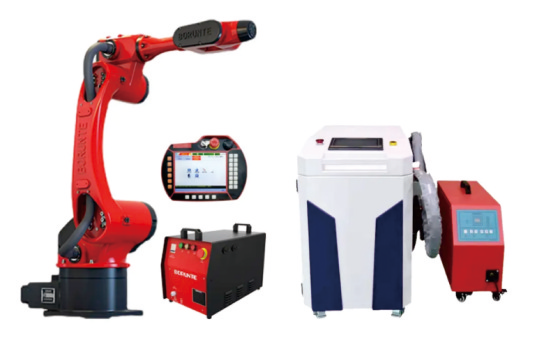
What's the difference between industrial robot and collaborative robot
In the era of intelligent manufacturing, robots have become core drivers of production efficiency improvement. Industrial robots and collaborative robots (cobots) are two pivotal types of automation equipment, but they differ significantly in design logic, application scenarios, and performance characteristics. Understanding these differences between industrial robots and collaborative robots is crucial for businesses to select the right industrial automation solution. This article will dissect the key distinctions between industrial robots and collaborative robots from multiple perspectives, helping enterprises make informed decisions for their automation upgrades.
1. Core Design Concept: Replacement vs. Collaboration
The fundamental difference between industrial robots and collaborative robots lies in their design philosophy. Industrial robots are engineered to replace human labor in large-scale, high-volume production environments. Their core goal is to maximize efficiency, precision, and continuity, with most industrial robots operating independently without human intervention. These industrial robots are typically heavy-duty, fixed-installation equipment, optimized for repetitive tasks in structured industrial automation setups.
In contrast, collaborative robots are designed to work alongside humans. They prioritize safety, flexibility, and human-machine interaction, enabling seamless cooperation between humans and collaborative robots in shared workspaces without the need for physical safety barriers like fences. The birth of cobots addresses the limitations of traditional industrial robots in flexible production, filling the gap between manual operations and full automation powered by industrial robots.
2. Performance Specifications: Trade-offs Between Power and Safety
Performance parameters reflect the different positioning of industrial robots and collaborative robots, with obvious trade-offs between power (for industrial robots) and safety (for collaborative robots) in their design.
Industrial Robots: High Speed, High Payload, High Precision
Industrial robots excel in high-performance industrial automation tasks. They feature high movement speeds, large payload capacities, and exceptional repeat positioning accuracy—critical advantages that make industrial robots irreplaceable in heavy-duty and precision-driven industries. For instance, automotive manufacturing industrial robots can handle payloads of dozens to hundreds of kilograms, with repeat accuracy reaching ±0.01mm. Equipped with robust mechanical, drive, and control systems, these industrial robots operate continuously for 24 hours in harsh environments such as high temperatures, pollution, and high-risk areas, significantly boosting production efficiency.
Data from the International Federation of Robotics shows that industrial robots remain dominant in global installations, with China alone producing 59.5 million units in the first three quarters of 2025, exceeding the total output of 2024 . This highlights their irreplaceable role in large-scale manufacturing.
Collaborative Robots: Safety-First, Lightweight, Flexible
Collaborative robots prioritize safety over extreme performance, a key trait that distinguishes cobots from industrial robots. They adopt lightweight designs and are equipped with advanced safety features such as collision detection, force control sensors, and dual safety channels—technologies that enable collaborative robots to work safely with humans. When encountering human contact, collaborative robots immediately stop or slow down to avoid injury, complying with ISO 10218 and ISO/TS 15066 safety standards for human-robot collaboration. Their payload capacity is generally between 3-16kg, with moderate speed and precision—sufficient for most light-duty tasks where collaborative robots complement human work.
A key advantage of cobots is their ease of programming. Through "lead-through teaching," operators can guide the robot arm along the desired path to complete programming, eliminating the need for professional engineering skills . This plug-and-play capability makes them ideal for small-batch, high-mix production .
3. Safety Measures and Workspace Requirements
Safety design and workspace needs further distinguish industrial robots from collaborative robots, as their operational characteristics demand different safety protocols.
Industrial robots require strict safety isolation due to their high speed and power— a necessity that adds to the overall cost of deploying industrial robots. They must be enclosed by safety fences, with additional safeguards like laser scanners, safety mats, or interlocking gates to prevent human access during industrial robot operation. This isolation requires significant floor space and increases installation complexity and costs associated with industrial robot integration.
Collaborative robots enable fenceless operation, a major advantage over industrial robots for space-constrained facilities. Their inherent safety features allow direct integration of collaborative robots into existing workspaces alongside humans, reducing space requirements and installation time for collaborative robot deployment. This flexibility makes collaborative robots particularly valuable for small and medium-sized enterprises (SMEs) with limited floor space and dynamic production needs.
4. Application Scenarios: Specialization vs. Versatility
The distinct characteristics of industrial robots and collaborative robots determine their divergent application fields in industrial automation.
Industrial Robots: Large-Scale, Heavy-Duty Industries
Industrial robots are widely used in high-volume, standardized production sectors where consistency and efficiency are paramount. Key applications of industrial robots include: automotive manufacturing (welding, painting, assembly), electronics (precision component placement), logistics (heavy-duty material handling), and metal processing (cutting, forging). Industrial robots thrive in environments where tasks are fixed, repetitive, and require consistent high performance—scenarios where human labor is either inefficient or high-risk.
Collaborative Robots: Flexible, Human-Centric Environments
Cobots shine in scenarios requiring human-robot collaboration and flexible production, where industrial robots may be too rigid. Common applications of collaborative robots include: 3C electronics (small-parts assembly, screw locking), pharmaceuticals (precision packaging, material handling), healthcare (rehabilitation assistance, laboratory operations), and warehousing (order picking, light palletizing). Their ability to adapt quickly to changing tasks makes collaborative robots popular in SMEs and industries with frequent production adjustments. By 2023, collaborative robots accounted for 10.5% of global industrial robot installations, a share expected to grow with rising labor shortages and demand for flexible automation.
5. Total Cost of Ownership: Long-Term Investment vs. Cost-Effective Deployment
The cost structure of industrial robots and collaborative robots also varies significantly, impacting their suitability for different businesses. Industrial robots have higher initial costs, including equipment, safety infrastructure, installation, and professional programming for industrial robots. They require regular maintenance of core components like high-precision reducers and servo systems, leading to higher long-term operational costs for industrial robots. However, their high efficiency and durability deliver strong returns on investment in large-scale production where industrial robots can replace multiple human workers.
Collaborative robots offer lower initial costs and simpler installation compared to industrial robots. Their user-friendly programming reduces training and operational costs for collaborative robots, making them accessible to businesses without dedicated robotics engineers. Lower maintenance requirements further enhance the cost-effectiveness of collaborative robots for small-batch production and dynamic workplaces, where industrial robots may not be cost-efficient.
Conclusion: Choosing the Right Robot for Your Needs
Industrial robots and collaborative robots are not competitors but complementary tools in intelligent manufacturing. Industrial robots are ideal for large-scale, high-volume, precision-critical production, while collaborative robots excel in flexible, human-centric, small-batch scenarios. When selecting between industrial robots and collaborative robots, businesses should evaluate factors such as production volume, task complexity, workspace constraints, safety requirements, and budget to choose the right automation tool.
As technology advances, industrial robots are becoming more flexible, and collaborative robots are improving in payload and speed—blurring some lines between the two robot types. The future of robotics lies in integrating the strengths of industrial robots and collaborative robots to create more intelligent, adaptive automation solutions. For personalized advice on selecting between industrial robots and collaborative robots for your industry, contact the experts at heavth.com.
 简体中文
简体中文 English
 العربية
 Français
 Русский
 Español
 Português
 Deutsch
 italiano
 日本語
日本語 한국어
한국어 Nederlands
 Tiếng Việt
 ไทย
ไทย Polski
 Türkçe
 ພາສາລາວ
 ភាសាខ្មែរ
 Bahasa Melayu
 ဗမာစာ
ဗမာစာ Filipino
 Bahasa Indonesia
 magyar
 Română
 Čeština
 Монгол
 қазақ
қазақ Српски
 हिन्दी
 فارسی
فارسی Kiswahili
 Slovenčina
 Slovenščina
 Norsk
Norsk Svenska
 українська
 Ελληνικά
 Suomi
Suomi Հայերեն
 Latine
 Dansk
Dansk Shqip
Shqip বাংলা
বাংলা Hrvatski
 Afrikaans
 Gaeilge
 Eesti keel
 Oʻzbekcha
 latviešu
 Aymara
 Azərbaycan dili
 Беларуская мова