In the dynamic landscape of manufacturing, automation has become a cornerstone of efficiency, precision, and safety. Among the most impactful technological advancements is the integration of robotic welding and cutting systems, which have redefined production standards across industries ranging from automotive to aerospace. This article explores how robots are revolutionizing welding and cutting processes, their key applications, tangible benefits, and future trends shaping the industry — essential insights for manufacturers looking to stay competitive in 2026 and beyond.
What Are Robotic Welding and Cutting Systems?
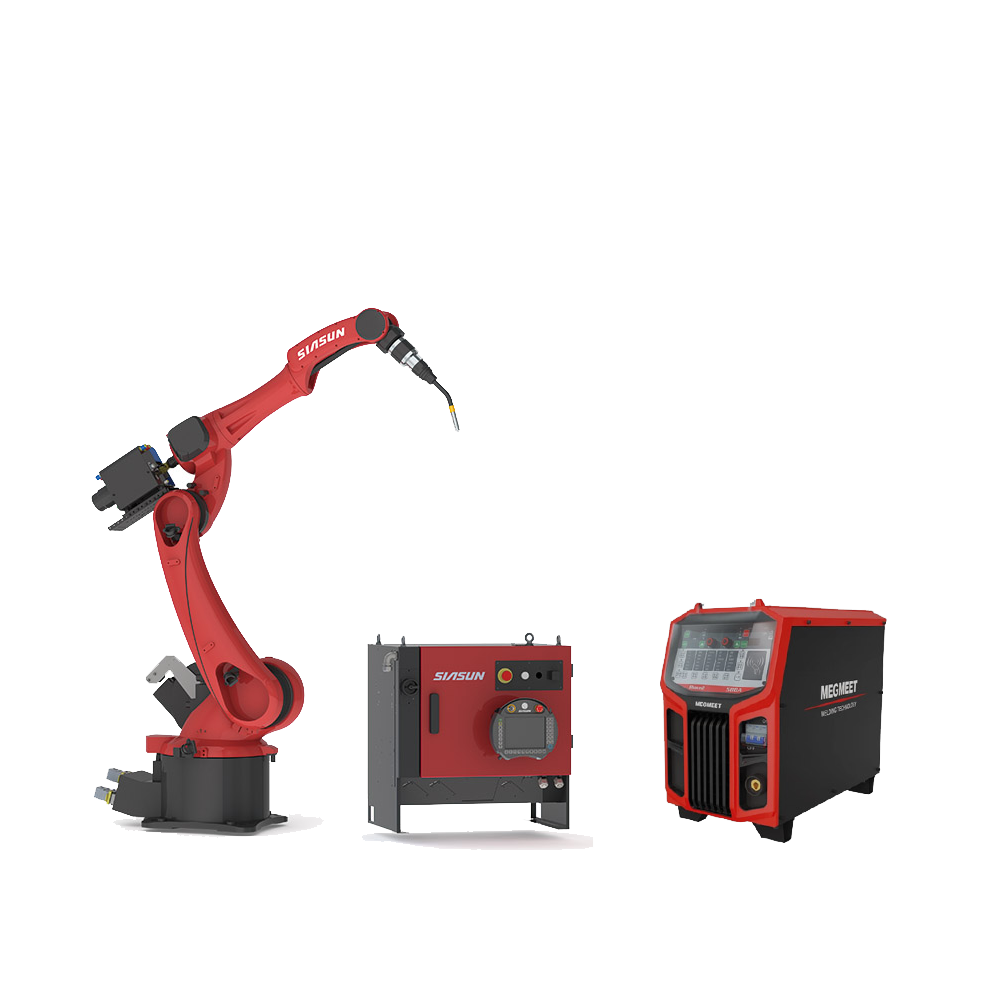
Robotic welding and cutting systems are automated solutions that leverage programmable robots equipped with advanced sensors, vision systems, and specialized end-effectors to perform joining and slicing tasks with unparalleled consistency. Unlike manual operations, these systems operate based on pre-programmed trajectories, real-time adjustments, and precision control, making them ideal for high-volume production and complex component manufacturing.
Modern robotic systems support diverse processes, including: Laser welding/cutting: Enables narrow, deep welds and high-speed cutting of thin materials, widely used in automotive body parts production. Plasma cutting: Utilizes high-temperature plasma to melt and cut metals, with robotic integration eliminating manual cleanup and dross accumulation. MIG/MAG welding: Automated metal inert gas welding for high-throughput, repetitive tasks, enhanced by collaborative robots (cobots) for flexible workflows. Arc welding: Robotic arc welding delivers uniform heat distribution and repeatability, critical for heavy machinery components.
Key Applications Across Industries
Robotic welding and cutting systems are not one-size-fits-all — their versatility allows deployment across diverse sectors, addressing unique industry challenges. Below are the most impactful applications:
Automotive Industry
The automotive sector is a pioneer in robotic welding and cutting adoption, with systems like ABB’s laser welding cells dominating production lines. These robots excel at welding thin materials (e.g., A-pillars, B-pillars) at high speeds, ensuring structural integrity and reducing weight for fuel efficiency. Robotic laser brazing, a specialized process where only filler wire is melted, is also used for aesthetic automotive components, eliminating base material distortion.
Heavy Machinery and Mining Equipment
For manufacturers of heavy earth-moving equipment, robotic cobots have solved the challenge of low-volume, high-mix production. Canada-based Carriere Industrial Supply deployed Universal Robots’ UR10e cobots for plasma cutting and MIG welding of large truck bodies, reducing trimming time per unit from 50 hours to 12 hours and delivering 1,000 hours of savings on a single project <superscript:4. The cobots’ portability allows operators to reposition them for complex joints, eliminating ergonomic strain on human workers.
Aerospace and Precision Engineering
Aerospace components demand sub-millimeter precision, a requirement met by robotic systems integrated with path-planning software like SurfMotion. This open-source ROS 2 package generates smooth trajectories for complex surfaces, ensuring consistent welds on titanium and nickel alloys — materials critical for aircraft parts <superscript:3. Robotic laser cutting also enables precise shaping of hydraulically formed components, outperforming 5-axis CNC machines in flexibility.
Electronics and Consumer Goods
In electronics manufacturing, robotic micro-welding systems handle delicate components like circuit boards and battery packs, minimizing heat input to avoid damage. Laser cutting robots also produce precise casings for smartphones and appliances, supporting high-volume production with minimal waste.
Unmatched Benefits of Robotic Welding and Cutting
The shift from manual to robotic operations delivers measurable improvements in productivity, quality, and safety — justifying the upfront investment for long-term gains:
1. Enhanced Productivity and Throughput
Robots operate 24/7 without fatigue, doubling or quadrupling output compared to manual processes. West Coast Manufacturing achieved a 400% productivity boost by switching from manual TIG welding to robotic laser welding, increasing part output from 10-30 units per hour to 45-60 units . Collaborative setups, where humans and cobots work in tandem, further optimize workflows by assigning repetitive tasks to robots and complex judgment calls to operators.
2. Superior Quality and Consistency
Manual welding quality depends on operator skill and concentration, leading to variations across shifts. Robotic systems maintain ±0.1mm repeatability, ensuring uniform welds and cuts every time. This eliminates post-weld straightening, grinding, and rework — Carriere Industrial Supply eliminated 80% of plasma cutting cleanup time by adopting robotic systems.
3. Improved Workplace Safety
Welding and cutting expose workers to heat, toxic fumes, UV radiation, and sharp edges. Robots automate these hazardous tasks, reducing human exposure to life-threatening conditions <superscript:1superscript:5. Cobots add an extra layer of safety with built-in collision detection, stopping operations if they encounter human workers.
4. Long-Term Cost Savings
While robotic systems require higher upfront investment, they lower long-term costs by reducing labor expenses, waste, and rework. The global robotic welding market is projected to grow at a CAGR of 6.1%, reaching $7.2 billion by 2032, as manufacturers recognize these cost efficiencies <superscript:5. For high-volume projects, the return on investment (ROI) can be achieved in as little as 12-18 months.
Future Trends Shaping Robotic Welding and Cutting
The industry is evolving rapidly, with three key trends driving innovation:
AI and Machine Learning Integration: Smart robots will use AI to self-optimize weld paths, detect defects in real time, and adapt to material variations, reducing programming time and improving error rates.
Open-Source Solutions: Tools like SurfMotion are bridging the gap between proprietary and open-source systems, making robotic automation accessible to small and medium-sized manufacturers.
Sustainability Focus: Future systems will optimize energy use and reduce material waste, aligning with global manufacturing sustainability goals.
Is Robotic Welding and Cutting Right for Your Business?
Robotic systems are most beneficial for businesses with high-volume production, repetitive tasks, or complex components requiring precision. For low-volume, custom projects, manual welding may still be preferable — but cobots offer a flexible middle ground, adapting to changing workflows without extensive reprogramming.
At www.heavth.com, we specialize in connecting manufacturers with tailored robotic welding and cutting solutions. Our team of experts can assess your production needs, recommend the right systems, and support seamless integration to maximize efficiency and ROI. Contact us today to explore how robotic automation can transform your operations.
FAQs About Robotic Welding and Cutting
Q: What is the precision of robotic welding systems?
A: Most robotic welding systems offer ±0.1mm repeatability, ensuring consistent results across thousands of parts .
Q: How long does it take to program a robotic welding/cutting system?A: Simple tasks can be programmed in hours, while complex workflows may take days. Open-source tools and intuitive interfaces are reducing programming time significantly.
Q: Are robotic systems suitable for small businesses?A: Yes — cobots are affordable, easy to use, and adaptable, making robotic automation accessible to small and medium-sized manufacturers.
 简体中文
简体中文 English
 العربية
 Français
 Русский
 Español
 Português
 Deutsch
 italiano
 日本語
日本語 한국어
한국어 Nederlands
 Tiếng Việt
 ไทย
ไทย Polski
 Türkçe
 ພາສາລາວ
 ភាសាខ្មែរ
 Bahasa Melayu
 ဗမာစာ
ဗမာစာ Filipino
 Bahasa Indonesia
 magyar
 Română
 Čeština
 Монгол
 қазақ
қазақ Српски
 हिन्दी
 فارسی
فارسی Kiswahili
 Slovenčina
 Slovenščina
 Norsk
Norsk Svenska
 українська
 Ελληνικά
 Suomi
Suomi Հայերեն
 Latine
 Dansk
Dansk Shqip
Shqip বাংলা
বাংলা Hrvatski
 Afrikaans
 Gaeilge
 Eesti keel
 Oʻzbekcha
 latviešu
 Aymara
 Azərbaycan dili
 Беларуская мова