How to make a choice between water cooling laser welder and air cooling laser welder?
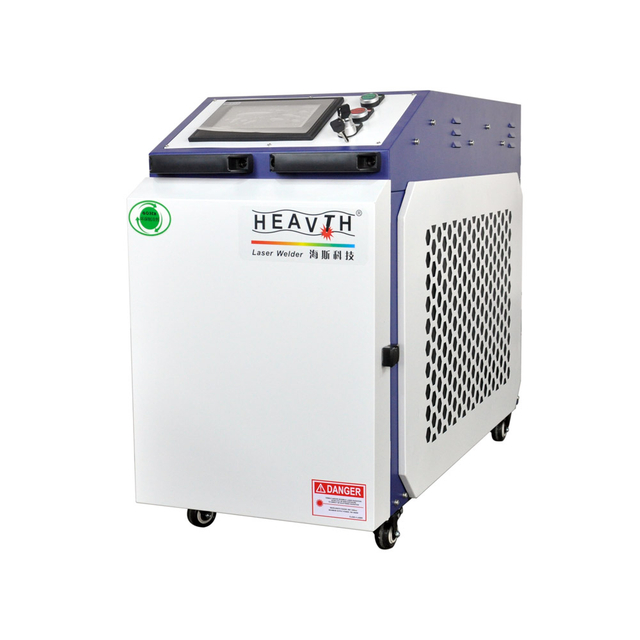
When investing in a laser welder, a key decision is choosing between water-cooled and air-cooled models. As the "thermal control core" of the equipment, the cooling system directly impacts stability, welding quality, service life, and long-term costs. There is no absolute "better" option—only one that fits your production needs, working conditions, and budget. This guide breaks down their key differences, advantages, and selection criteria to help you make an informed choice.
First, Understand the Core: Working Principles
The core difference between these two lies in their heat dissipation mechanisms, which in turn determine their performance capabilities and ideal application scenarios.
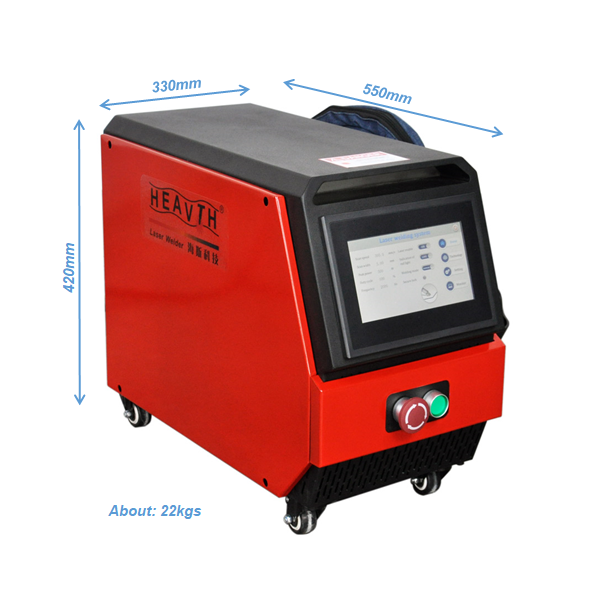
Air Cooling Laser Welder: Simple, Portable Forced Heat Dissipation
Air-cooled systems use built-in fans to accelerate air circulation, drawing heat away from core components such as the laser generator and welding head. High-end models may incorporate large-surface-area heat sinks to enhance efficiency. This self-contained design requires no additional accessories, enabling instant startup without complex debugging.
Water Cooling Laser Welder: Precise, Stable Circulating Heat Dissipation
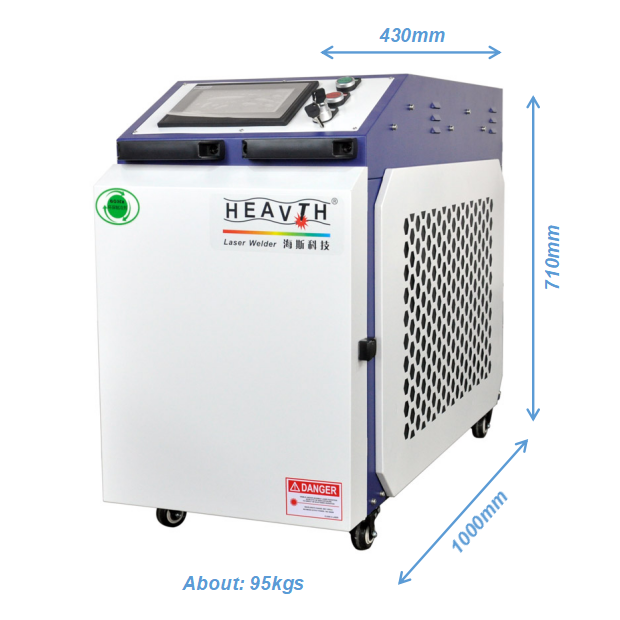
Water-cooled systems use water or specialized antifreeze to absorb heat from components, which is then dissipated via chillers or radiators. Advanced units feature dual-temperature control for lasers and welding heads, achieving ultra-precise regulation—some maintain a temperature fluctuation of ±0.08℃.
Key Differences: A Side-by-Side Comparison
To clarify their strengths and limitations, here is a comparison across key dimensions:
| Comparison Dimension | Air Cooling Laser Welder | Water Cooling Laser Welder |
| Heat Dissipation Efficiency | Moderate, suitable for low-to-medium power; high-end models with optimized ducts support short-term continuous operation. | High, rapidly dissipating large heat loads to enable high-power continuous operation. |
| Temperature Control Precision | Approximately ±5℃ with significant temperature fluctuations. | Within ±1℃; high-end models can reach ±0.08℃ for stable control. |
| Suitable Power Range | Low-to-medium (mostly below 500W, up to 2000W). | Medium-to-high (above 1000W, up to 3000W and higher). |
| Operating Duration | Ideal for intermittent use; high-end models support 6-8 hours of daily operation. | Supports 24/7 high-load operation, making it suitable for automated production lines. |
| Equipment Cost | Higher upfront cost (approximately $600-$750 more for the same power) but no auxiliary equipment fees. | Lower initial purchase cost but requires additional investment in chillers and accessories. |
| Maintenance Cost | Low—no consumables required, only regular dust cleaning of heat sinks. | Higher—coolant replacement every 3-6 months and regular pipe cleaning to prevent scaling. |
| Portability | Compact (5-10kg for handheld models), easy to move for outdoor or high-altitude work. | Bulky, requires space for chillers, and has poor mobility. |
| Environmental Adaptability | Sensitive to dusty environments (dust accumulation reduces efficiency); suitable for normal temperature conditions. | Requires antifreeze in low temperatures; more tolerant of dusty environments. |
3 Key Selection Criteria: Choose Based on Your Actual Needs
To choose the right cooling system, align it with your production realities. Focus on these three key factors:
1. Equipment Power and Welding Requirements
Choose air cooling if: You use low-to-medium power equipment (below 500W) for thin workpieces (<1mm), such as 3C parts, jewelry, or on-site jobs like guardrail installation. It is also ideal for prototyping or intermittent welding tasks. Air-cooled models deliver ±0.1mm precision, matching that of same-power water-cooled units.
Choose water cooling if: You need high-power equipment (above 1000W) for thick plate welding (>2mm), such as automotive parts. It ensures stable temperature control, preventing laser power attenuation while maintaining ±0.1mm precision.
2. Production Conditions and Operating Duration
Choose air cooling if: You have a small workshop, require equipment mobility, or operate for less than 8 hours daily. Its portability, low maintenance needs, and instant startup capability significantly enhance work flexibility.
Choose water cooling if: You operate 24/7 automated production lines. Compared to air cooling, it reduces equipment failure rates by 30%-50% under high-load conditions.
3. Budget and Long-Term Operating Costs
Choose air cooling if: You have a tight budget, handle short-term projects, or need mobile operations. It saves on chiller costs ($1,500-$3,000) and reduces equipment management efforts by 30% for small-batch production.
Choose water cooling if: You pursue large-scale, long-term production. It extends equipment lifespan and ensures consistent welding quality, minimizing losses from failures or defective workpieces.
FAQ: Common Questions About Cooling Systems
1. Do water cooling laser welders require specialized coolant?
Yes—use specialized antifreeze or deionized water to avoid scaling. Add antifreeze when temperatures drop below 0℃ to prevent freezing.
2. Can air cooling laser welders run 24/7?
Full-load 24/7 operation is not recommended. High-end air-cooled models support 6-8 hours of daily use. For intermittent work, allow 10-15 minutes of cooling every 2-3 hours to extend the equipment’s lifespan.
3. Are there air cooling options for high-power laser welders?
Rarely. Most air-cooled models max out at 2000W; units above 3000W rely on water cooling due to extreme heat generation.
Conclusion: Choose the Right One, Not the Expensive One
Ultimately, your choice should align with your workflow, power requirements, and operating environment. Air cooling excels in portability and low maintenance for low-to-medium power, intermittent use cases. Water cooling dominates high-power, 24/7 large-scale production with superior stability and consistency.
Carefully evaluate your welding tasks, daily operating time, and budget before making a purchase. For industry-specific recommendations tailored to your needs, contact the experts at
heavth.com today.
 简体中文
简体中文 English
 العربية
 Français
 Русский
 Español
 Português
 Deutsch
 italiano
 日本語
日本語 한국어
한국어 Nederlands
 Tiếng Việt
 ไทย
ไทย Polski
 Türkçe
 ພາສາລາວ
 ភាសាខ្មែរ
 Bahasa Melayu
 ဗမာစာ
ဗမာစာ Filipino
 Bahasa Indonesia
 magyar
 Română
 Čeština
 Монгол
 қазақ
қазақ Српски
 हिन्दी
 فارسی
فارسی Kiswahili
 Slovenčina
 Slovenščina
 Norsk
Norsk Svenska
 українська
 Ελληνικά
 Suomi
Suomi Հայերեն
 Latine
 Dansk
Dansk Shqip
Shqip বাংলা
বাংলা Hrvatski
 Afrikaans
 Gaeilge
 Eesti keel
 Oʻzbekcha
 latviešu
 Aymara
 Azərbaycan dili
 Беларуская мова